Category: People Pulse Media

  • Video Training Versus Classroom Induction Compared

    Video Training Versus Classroom Induction Compared

    A new worker arrives at site at 7:30 a.m. They need to understand access rules, PPE, emergency procedures, and the task in front of them before work starts. That is where video training versus classroom induction becomes an operational decision, not a preference for one delivery format over another.

    For organizations across construction, manufacturing, healthcare, logistics, and other safety-sensitive sectors, the question is rarely whether training is required. It is whether people can understand it the first time, complete it without slowing operations, and demonstrate that they understood it when an auditor asks.

    Classroom induction still has a place. So does video. The strongest onboarding systems do not defend one method out of habit. They use each where it does the job best.

    Video Training Versus Classroom Induction: The Real Difference

    Classroom induction puts a trainer, a group of employees, and the material in one room at one time. It can work well when the session requires discussion, practical demonstration, immediate correction, or site-specific questions. A capable facilitator can read the room, clarify a confusing point, and reinforce the standards that matter most.

    The problem is consistency at scale. The quality of a classroom session often depends on who delivers it, how much time they have, and whether the group can follow the language being used. A rushed induction at the end of a long shift does not become effective because everyone signed an attendance sheet.

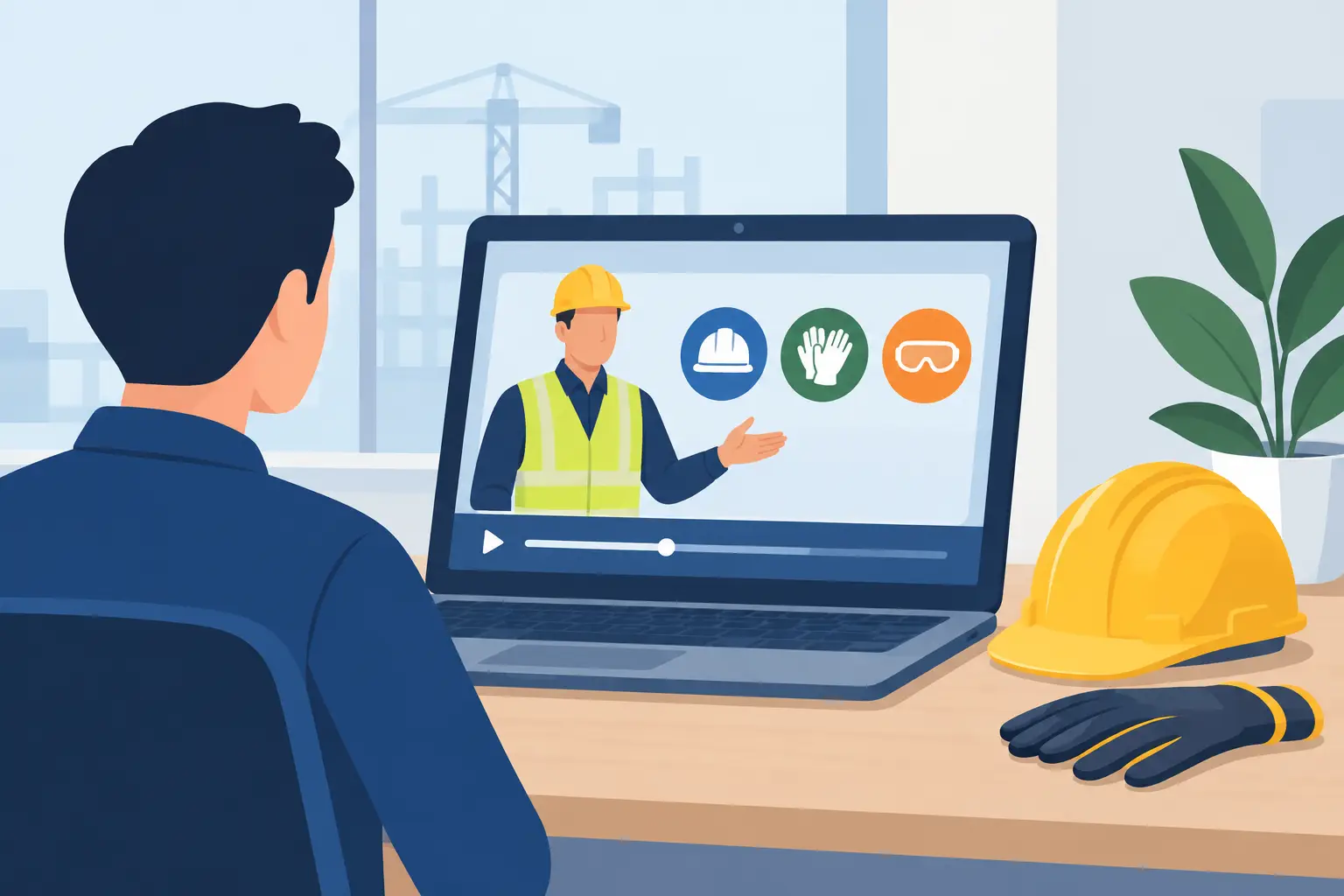
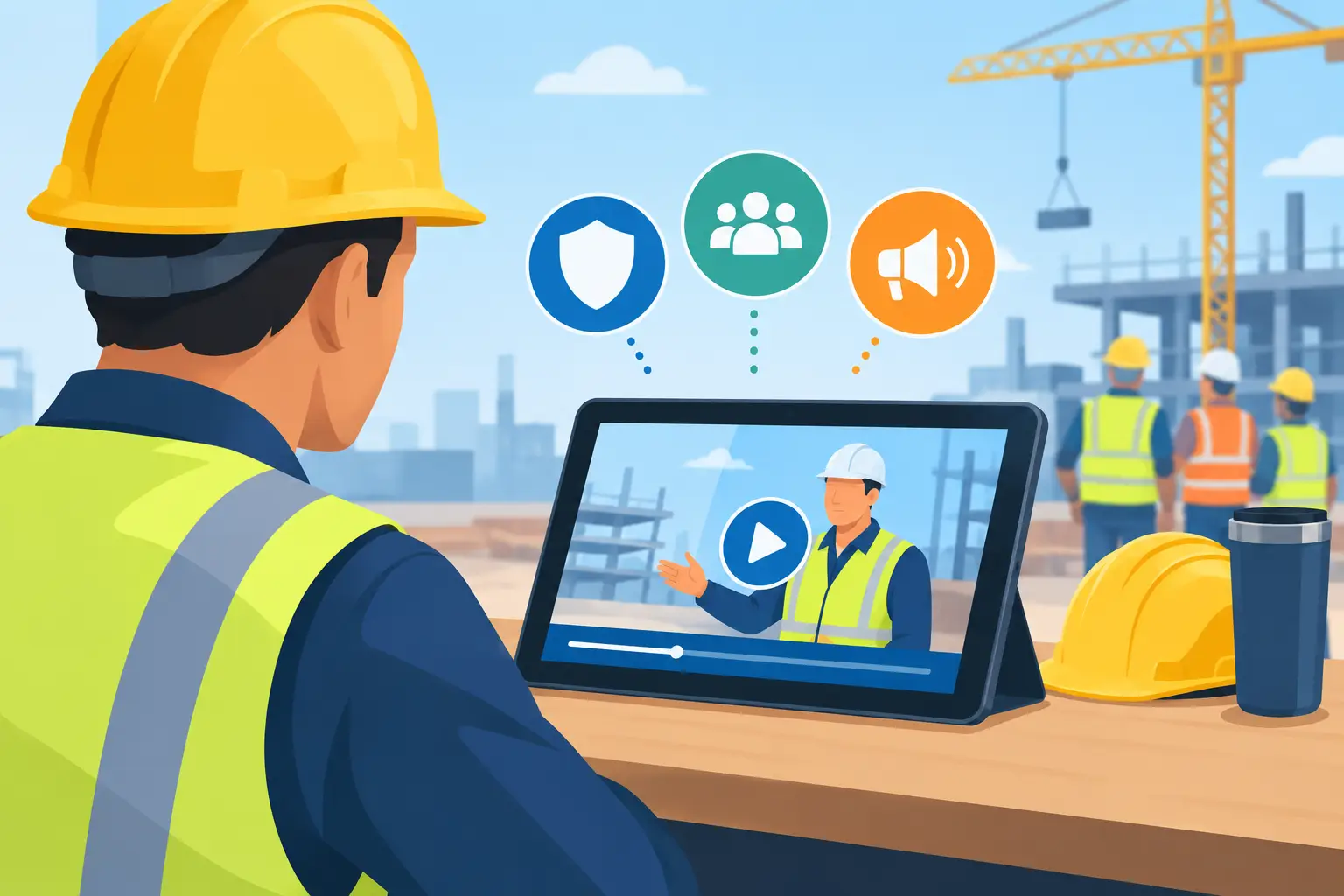
    Video training gives every worker the same core message. The sequence is fixed. The language is controlled. Visual demonstrations show what good practice looks like, rather than asking a trainer to explain it repeatedly. Workers can complete the content before arriving on site, at a training station, or from a device when access is approved.

    That consistency matters when your workforce spans multiple locations, contractors, shifts, and languages. It also matters when a regulation, procedure, or incident requires training content to be updated quickly. One revised video can replace an uneven chain of verbal briefings.

    But video is not automatically better. A long, generic film played to a room of tired people is simply classroom induction projected onto a wall. It may look more polished, but it does not guarantee attention, understanding, or recall.

    Where Classroom Induction Still Earns Its Place

    Some learning needs human interaction. A confined-space entry procedure, a plant walk-through, a hands-on equipment check, or a high-risk task briefing benefits from a supervisor who can observe behavior and answer questions in context.

    Classroom sessions are also valuable when a team needs to discuss a recent incident, a change in site conditions, or a client-specific requirement. These are not topics that should be reduced to a one-way presentation. Workers may need to raise concerns, challenge assumptions, and practice a response.

    The limitation is that classroom time is expensive. It pulls supervisors away from operations, gathers people who may be on different shifts, and can create bottlenecks during mobilization. If each new starter requires a two-hour session before they can begin, induction can quickly become a labor-planning issue.

    There is also the paperwork problem. Attendance confirms presence. It does not prove comprehension. A signature on a form cannot tell you whether a worker understood the emergency assembly point, the lockout procedure, or the reporting process for an unsafe condition.

    Where Video Training Delivers Better Results

    Video is particularly effective for core induction content that must be repeated accurately: site rules, PPE standards, traffic management, emergency response, code of conduct, food safety basics, hygiene requirements, quality procedures, and brand or customer-service expectations.

    A well-made training video removes unnecessary explanation and shows the right action clearly. It uses real environments, recognizable equipment, and practical examples. It is structured around what a person needs to do, not around how much information the organization wants to display.

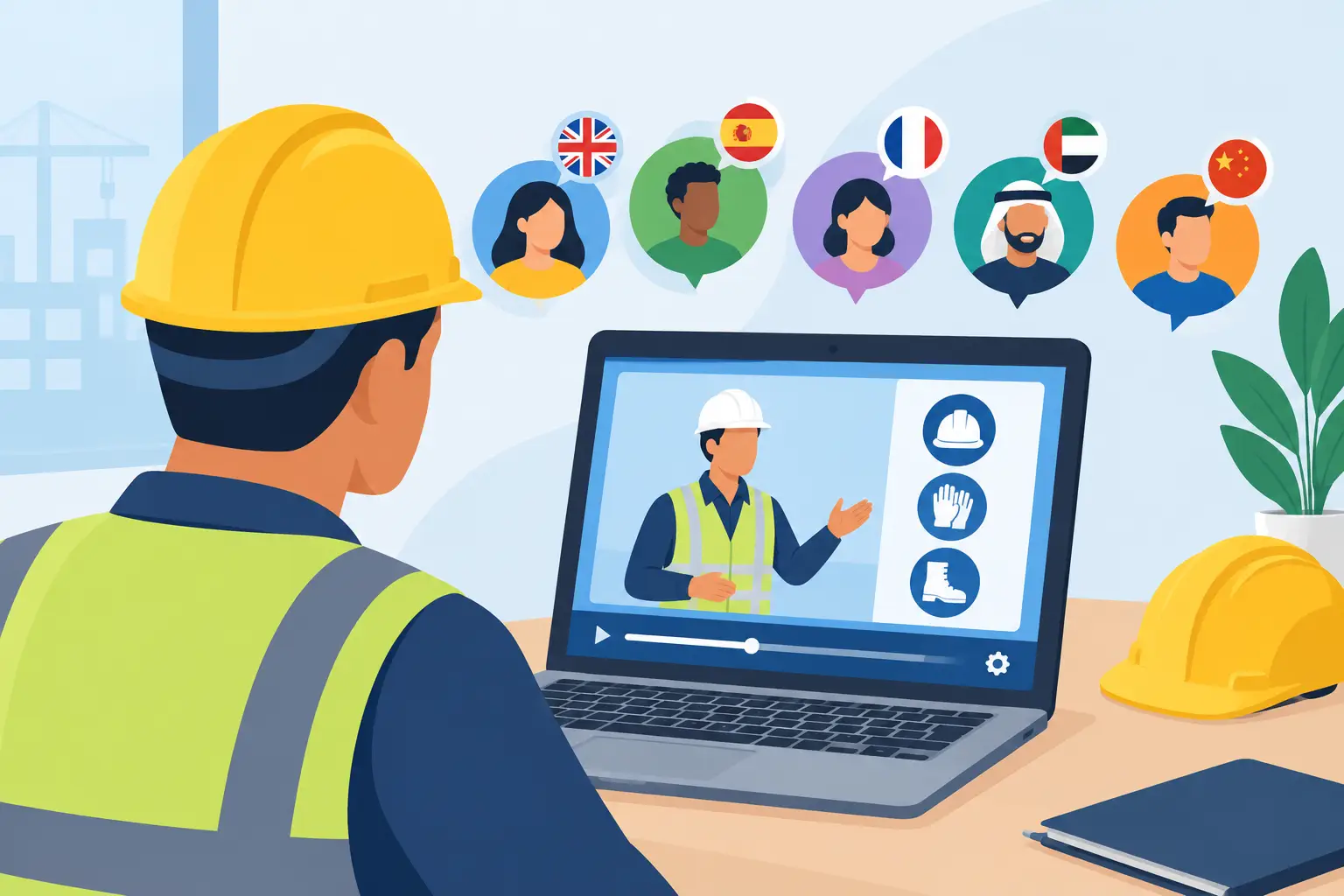
    For multilingual teams, the advantage is even clearer. Subtitles alone are not always enough, especially for employees with varying reading confidence. Language versions in Arabic, English, Hindi, Malayalam, and other relevant languages allow workers to receive critical instructions in words they can process quickly.

    This is not a cosmetic production choice. If a frontline employee cannot understand a safety instruction, the organization has a communication failure with operational consequences.

    Video also supports flexible scheduling. New hires do not need to wait for the next classroom slot. Contractors can complete assigned modules before deployment. Refresher training can be issued to targeted groups without bringing everyone into a room. In many cases, that reduces training time substantially while improving consistency.

    The Missing Layer: Proof of Understanding

    The decision should not stop at delivery. A video can train, but the organization still needs evidence that each person completed the material and understood the key points.

    This is where assessments change the value of video-based induction. Short, role-based questions after a module can test whether the learner understood critical rules. A failed response identifies where reinforcement is needed. A completed assessment creates a record that is stronger than attendance alone.

    For HSE, HR, operations, and compliance teams, the useful record includes the worker’s identity, assigned content, completion time, assessment result, and renewal status. It should be available when needed, rather than reconstructed from spreadsheets, paper files, and email chains.

    People Pulse Media’s PULSYON platform is designed around this practical requirement. Workers access training from a device, complete live assessments, and generate documented completion records without classroom paperwork or software installation. The video trains. The assessment helps prove it was understood.

    Choose the Method by Risk, Not Habit

    The most effective approach is usually blended. Use video for the standardized information every person needs. Use in-person time for what requires observation, discussion, practice, or a site-specific decision.

    A construction company, for example, may issue a multilingual video before a worker arrives. The content covers general site rules, PPE, reporting, welfare facilities, and emergency response. On arrival, the supervisor conducts a short site walk, confirms the worker understands local hazards, and observes practical requirements. The worker is not sitting through repeated explanations, and the supervisor is not trying to deliver a full compliance course at the gate.

    A manufacturing facility may use video for hygiene, machine-area behavior, quality expectations, and emergency routes. The line manager then handles task authorization and equipment-specific instruction. A healthcare provider may use video for privacy, infection-control principles, and patient-facing standards, followed by department induction for local systems and responsibilities.

    The split depends on the risk level, workforce profile, operating environment, and frequency of intake. There is no value in forcing a complex hands-on skill into a video-only format. Equally, there is no value in making workers attend a classroom session to hear the same fixed rules every week.

    What Good Video Induction Requires

    Effective training video is not a corporate film with a few safety icons added at the end. It needs a clear learning purpose, a defined audience, and a decision about what the worker must know or do after viewing.

    Keep modules focused. A 25-minute induction that tries to cover every policy often loses the people it is meant to protect. Break the content into short sections that reflect real work situations. Use plain language. Show the correct action. Repeat only what is critical.

    Production quality matters because unclear audio, unfamiliar visuals, or rushed translations reduce comprehension. But style should support the instruction, not compete with it. The goal is not to impress a boardroom. It is to help a worker make the right decision on the job.

    Build review and update cycles into the program as well. Procedures change, sites evolve, and client requirements shift. Training content should be easy to revise without rebuilding the entire induction process.

    The Better Question to Ask

    Instead of asking whether video training is better than classroom induction, ask where each method creates the most confidence with the least operational friction. Standardize what can be standardized. Bring people together when interaction genuinely improves competence. Record both completion and understanding.

    A worker should leave induction knowing what safe work looks like, what to do when something is wrong, and where to get help. If your current process cannot deliver that clearly across every shift and language, the format is not the issue. The communication system is.

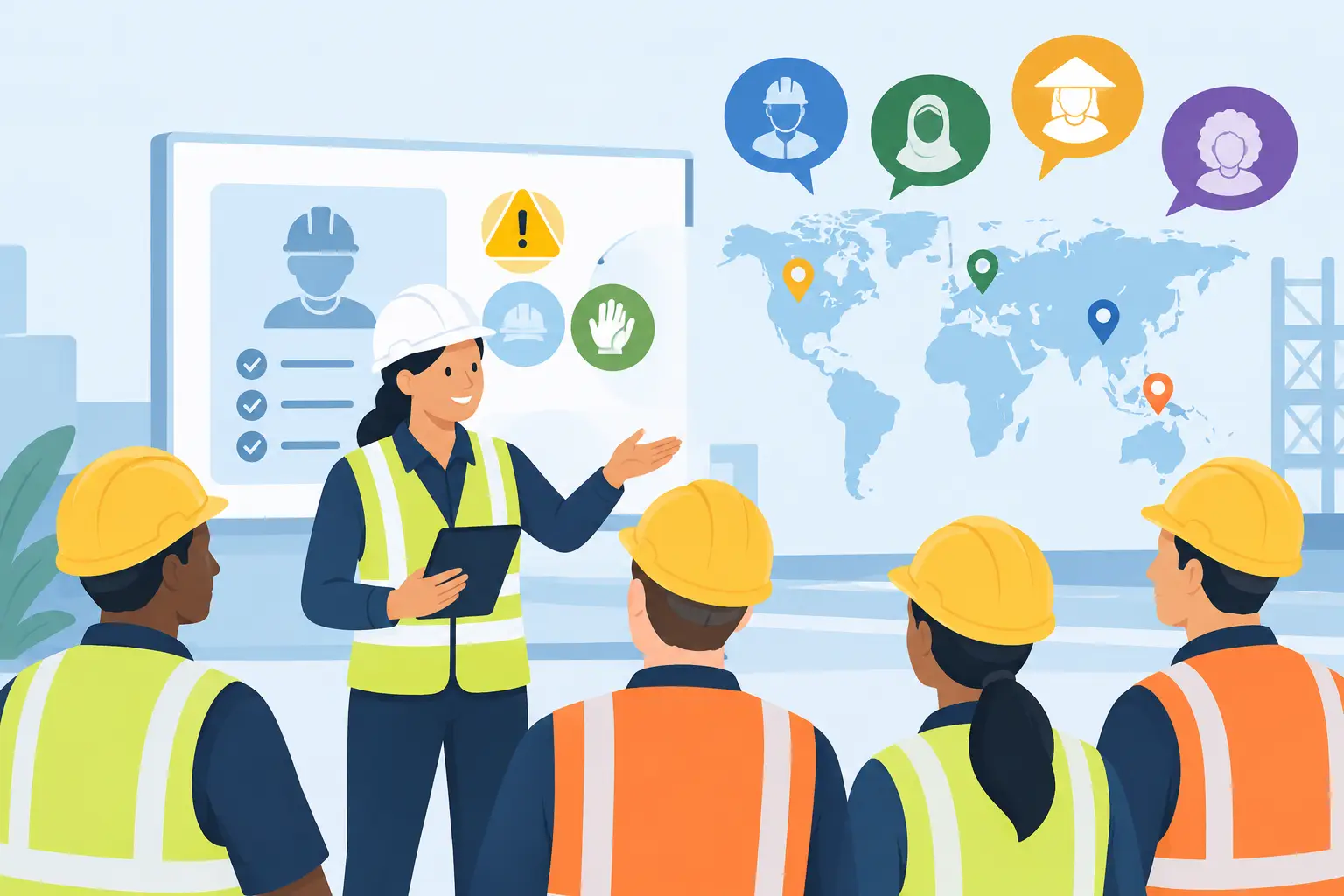
  • A Multilingual Onboarding Case Study That Worked

    A Multilingual Onboarding Case Study That Worked

    A new operator arrives at a site at 6:30 a.m. The induction video is in English, runs for 45 minutes, and covers rules they have not yet seen in practice. They sign the attendance sheet because the process requires it. Whether they understood emergency routes, PPE rules, or reporting procedures is another question.

    This multilingual onboarding case study examines how one common onboarding problem can be corrected: not by adding more slides, but by making critical information easier to understand, verify, and retrieve. The details are anonymized and representative of a typical safety-sensitive workforce deployment, rather than a published client account.

    The operational problem was not attendance

    The organization was a regional industrial business with multiple sites, a mixed workforce, regular contractor intake, and a strict internal HSE standard. Its induction process looked complete on paper. New hires attended a classroom session, watched a general safety video, received printed material, and signed a register.

    The gaps appeared later. Supervisors repeated basic rules on the floor. Some workers could describe a policy but could not apply it to a site-specific scenario. Training records showed attendance, not understanding. When a new intake arrived, HR, HSE, and operations each carried part of the process, creating delays and version-control problems.

    Language was central to the issue. English was used as the default. Arabic was available for some material. Yet much of the frontline workforce was more comfortable in Hindi or Malayalam. Translation existed in places, but it was inconsistent. A worker might receive a translated handout after watching an English-only video, with no clear way to confirm that the same terms and instructions had been understood.

    That creates a compliance risk, but it also creates an operational one. If the first day is confusing, the supervisor inherits the cost. Production slows, questions multiply, and safe behaviors depend too heavily on informal explanations.

    What this multilingual onboarding case study changed

    The project team began with a simple decision: separate essential understanding from background information. The existing induction had tried to explain every policy, facility detail, and administrative step at once. The revised approach focused first on what a person needed to know before entering the work area.

    Three things were done properly. The training content was rebuilt around actual frontline decisions. The video was produced in the languages used by the workforce. The learning was followed by a short, role-based assessment with documented completion.

    This did not mean translating one long master video word for word. Literal translation can preserve language while losing meaning. Safety instructions often use technical terms, local expressions, and site-specific references that need careful adaptation. Scripts were reviewed for plain language, visual clarity, and consistency with the organization’s procedures before voice recording began.

    The video was designed for first-viewing comprehension

    The revised induction used short modules rather than a single extended film. One module covered site access and PPE. Another showed pedestrian routes, vehicle movement, and restricted areas. A third explained incident reporting and emergency response.

    Each module used familiar locations, recognizable uniforms, and practical examples. Instead of saying that workers must remain aware of mobile plant, the video showed where a worker should stand, what to look for, and when to stop. That distinction matters. Policies describe requirements. Good training shows behavior.

    Arabic, English, Hindi, and Malayalam versions were created with localized narration and on-screen text. The visuals stayed consistent across languages, which helped protect the meaning of the message and the organization’s brand standards. Additional languages could be added when workforce data justified it.

    The trade-off was production discipline. Multiple language versions require tighter script approval, more review rounds, and a controlled change process. But the alternative is worse: updating one version while outdated instructions remain in circulation somewhere else.

    Assessment became part of onboarding, not an afterthought

    Watching a video does not prove comprehension. The revised process therefore used short assessments tied to the modules and the employee’s role. Questions tested practical choices, not memory for policy wording.

    For example, a question might present a vehicle-pedestrian crossing situation and ask what action the worker should take. Another might check the correct reporting route after a near miss. Where a response was incorrect, the learner could revisit the relevant section before trying again.

    Using PULSYON, the organization could issue training to a device, capture completion, record assessment results, and produce a clear learning record without paper registers. Managers could see who had completed induction, who needed follow-up, and where repeated incorrect answers suggested a communication gap.

    That visibility changed the conversation. HSE teams were no longer limited to reporting how many people attended. They could identify whether a particular module was unclear, whether a contractor group required additional support, or whether a new site rule had reached the workforce.

    The rollout had to respect site reality

    A better video can still fail if access is difficult. Some workers did not have a company email address. Others shared devices or had limited time before deployment. The onboarding plan accounted for these conditions rather than assuming a desk-based learning environment.

    Training could be accessed on available devices before site entry or in a controlled induction area. Supervisors had a defined escalation path for workers who needed help, failed an assessment repeatedly, or required a language not included in the first rollout. Completion rules were agreed in advance: no confirmed induction, no release to the assigned work area.

    This is where HR, HSE, and operations need one shared process. HR owns employee data. HSE owns the content standard. Operations owns the practical release of people to work. If these teams use separate spreadsheets and informal handoffs, the system becomes difficult to trust.

    The rollout also included a review cycle. Procedures change. Site layouts change. Contractors change. A multilingual induction should be treated as controlled operational content, with named owners, revision dates, and a clear process for updating every approved language version.

    What improved and how it was measured

    The first improvement was speed with control. New starters spent less time in passive classroom induction because essential information was structured into short modules. That did not eliminate supervisor involvement. It made supervisor time more useful by shifting it toward site orientation, practical questions, and role-specific checks.

    The second improvement was consistency. Every new starter received the same approved message in a language they could follow. Supervisors were no longer expected to translate critical points from memory during a busy shift.

    The third improvement was evidence. Completion and assessment data created a stronger audit trail than a signed sheet alone. When an internal review asked who had completed a revised module, the team could retrieve the relevant records quickly.

    The most useful measures were not vanity metrics. The organization tracked completion before deployment, first-attempt assessment performance by language and role, repeat-question themes, overdue inductions, and time spent per learner. It also asked supervisors a practical question: are new starters arriving better prepared to work safely?

    Results will vary by workforce, site conditions, and the quality of existing material. A company with strong classroom delivery may see the largest gain in documentation and consistency. A company relying on long, English-only content may see a more visible change in comprehension and training time. The point is not to promise a fixed percentage. The point is to measure what changes after the process changes.

    Lessons for HSE and HR leaders

    The case shows why multilingual onboarding is not a translation purchase. It is a communication system. The content, language choices, delivery method, assessment design, and reporting process all need to support the same operational outcome: people understand what they must do before they begin work.

    Start with the workforce, not the corporate template. Review the languages actually spoken on site. Identify the decisions that matter most in the first shift. Remove content that is useful but not urgent. Then build a documented path from training assignment to confirmed understanding.

    A short video in the right language will not replace competent supervision, toolbox talks, or hands-on instruction. It should make those activities stronger. When workers arrive with the basics understood, the first conversation on the floor can focus on the work in front of them, not on repairing the gaps left by onboarding.

  • How to Localize Safety Briefings for Frontline Teams

    How to Localize Safety Briefings for Frontline Teams

    A worker can sign a training sheet without understanding a single instruction on it. That is the gap localization is meant to close. Knowing how to localize safety briefings is not simply a matter of translating English text into Arabic, Hindi, or Malayalam. It means making the critical action clear to the person standing beside moving equipment, working at height, handling chemicals, or entering a restricted area.

    For HSE, operations, and L&D leaders, the standard is straightforward: safety has to be understood the first time. If a briefing creates hesitation, relies on a supervisor to interpret it on the spot, or uses visuals that contradict the spoken message, it is not doing its job.

    Start With the Safety Decision, Not the Source Language

    Many localization projects fail before translation begins. The original briefing is often too long, written for policy approval rather than frontline use, and packed with terms that make sense only to head-office readers. Translating a weak source script produces the same weak briefing in several languages.

    First, reduce every section to the decision the worker must make. For a lockout procedure, that may be: isolate the energy source, apply your personal lock, verify zero energy, then begin work. For heat stress, it may be: recognize the warning signs, stop work, move to shade, report immediately, and follow the site response.

    This does not mean removing needed detail. It means separating what a worker needs during the task from supporting policy, legal definitions, and management notes. The first belongs in the briefing. The rest can sit in reference material where it does not slow down comprehension.

    A useful test is to ask: can a supervisor point to each line and show the action it requires? If the answer is no, rewrite it before localization starts.

    Localize the Meaning, Not Just the Words

    Direct translation is necessary, but it is not enough. Safety language carries site-specific meanings. A term such as “authorized person,” “permit receiver,” or “spotter” may need a locally familiar equivalent, a short explanation, or both. The right choice depends on the workforce, the client’s internal terminology, and applicable regulations.

    Arabic also requires decisions that a standard translation workflow can miss. Will the briefing use Modern Standard Arabic, or does the workforce respond better to a simpler register? Are English technical terms already common on site? Is the written Arabic easy to read on a mobile screen? Hindi and Malayalam versions need the same practical judgment. The goal is not linguistic purity. The goal is accurate action under working conditions.

    Keep critical terms consistent across the site. If one video calls a protective helmet a “hard hat” and another uses a different label, workers may still understand, but the training system becomes less controlled. Build an approved glossary for equipment, roles, hazards, emergency commands, and reporting steps. Then use it across videos, inductions, toolbox talks, assessments, and signage.

    Make Visuals Carry Their Share of the Message

    Frontline teams do not learn from narration alone. They watch what happens. A localized briefing should show the actual behavior, in the right sequence, with visual conditions close to the site where possible.

    If the narration says “maintain three points of contact,” show three points of contact clearly. If it says “inspect the harness before use,” show what workers should look for: damaged webbing, altered tags, worn connectors, or improper storage. Avoid generic stock footage when it changes the practical context. A clean warehouse scene does not explain a dusty construction access route, and a worker wearing the wrong PPE can quietly undermine the entire message.

    Visual localization also includes readable on-screen text. Do not squeeze long translated sentences into captions designed for English. Arabic may need different line breaks and right-to-left formatting. Some workers will watch on a phone in bright conditions, so small subtitles and fast-moving labels are poor choices regardless of language.

    When the process is complex, use simple motion graphics or 3D animation to isolate the risk. This is particularly useful when filming a hazardous action would create unnecessary exposure or when equipment is difficult to access during production.

    Use a Controlled Workflow for Localized Safety Briefings

    The fastest route is not to send a finished English video out for dubbing and hope for the best. Reworking visuals, timing, and terminology after final edit costs more and introduces errors. Build localization into production from the beginning.

    A practical workflow has five controls:

    • Source-script review: HSE, operations, and the production team confirm the required behavior, terminology, and audience before translation.
    • In-market translation and review: A qualified translator creates the language version, then a competent reviewer checks it against the site procedure and worker vocabulary.
    • Voice and visual adaptation: Voiceover pace, captions, graphics, names, signs, PPE, and hand signals are checked for each audience.
    • Frontline validation: A small group of representative workers watches the briefing and explains the required action in their own words.
    • Version control: Every approved language version is labeled, dated, stored, and connected to the same controlled procedure revision.

    The frontline validation step matters most. A technically accurate translation can still be unclear in practice. Ask workers what they would do after watching, not whether they “understood.” Their answer reveals whether the message has landed.

    Design for Listening, Watching, and Recall

    Workers may receive safety briefings in a noisy induction area, on a bus, before a shift, or through a personal device. Build for those conditions. Keep one subject per scene. Use short sentences. Pause after a critical instruction. Show the consequence only when it supports the behavior, not to create drama.

    Voice talent should be clear, credible, and paced for comprehension. Fast delivery can make a three-minute video shorter, but it can also make it useless. The right duration depends on the risk. A quick pre-task reminder may take 60 seconds. A confined-space entry briefing may require several focused modules, each followed by a confirmation of understanding.

    Do not assume every worker reads confidently in every language. Narration, visual demonstration, and simple assessments work together. This is why video is often more effective than a translated PDF for site-facing communication. The PDF documents distribution. A well-made briefing teaches the action.

    Prove Understanding After the Briefing

    Completion is not competency. A play button, a signature, or an attendance record only shows that a worker was present. It does not show whether they can identify the correct response when conditions change.

    Use short, role-based questions immediately after the briefing. Keep them tied to real decisions: Which isolation step comes first? What should you do if a lifting accessory has no valid inspection tag? Who must be notified before entering a restricted zone? Questions should be available in the worker’s selected language and use plain wording.

    For high-risk tasks, an assessment should be combined with practical observation. A worker may choose the correct answer on screen but still fit a harness incorrectly or fail to conduct a required pre-use check. The level of proof should match the risk and the regulation. Not every topic needs a lengthy test, but every critical procedure needs evidence proportionate to its consequences.

    A device-accessible platform such as PULSYON can connect localized video, role-based questions, completion status, and records in one place. That reduces paperwork and gives audit teams a clearer line from assigned training to demonstrated understanding. The system should support the training process, not become another administrative burden for supervisors.

    Common Mistakes That Weaken Localization

    The first mistake is treating language versions as an afterthought. If localization begins after the final English edit, teams often compromise on captions, voice timing, and visuals because the schedule is already fixed.

    The second is overloading the briefing. Adding every policy condition, exception, and disclaimer may satisfy a document reviewer while leaving workers unable to recall the key action. Use layered communication instead: a concise task-focused briefing, supported by procedures and supervisor guidance where needed.

    The third is assuming one language version serves everyone. Workers who share a national language may have different reading ability, technical vocabulary, or familiarity with site rules. Test with the actual audience, especially where literacy levels vary.

    Finally, do not let approval cycles blur accountability. HSE should own the safety accuracy. Operations should confirm site reality. Language reviewers should protect meaning. Production teams should make the message watchable and clear. When those roles are defined early, delivery moves faster and revisions become more useful.

    How to Localize Safety Briefings Without Losing Control

    Good localization creates a consistent safety standard across a diverse workforce. The words may change. The action cannot. Start with a briefing that is clear in its source language, localize terminology and visuals with discipline, validate it with frontline workers, and record whether the learning was understood.

    The strongest safety communication does not ask people to work harder to decode it. It shows them exactly what safe work looks like, in a language and format they can use when it matters.

  • What Makes Video Training Effective at Work?

    What Makes Video Training Effective at Work?

    A safety video can look polished, carry the right logo, and still fail where it matters: on the site, at the machine, or during an emergency. What makes video training effective is not production value alone. It is whether people understand the required action the first time, can apply it in their role, and leave behind proof that the training happened.

    For HSE, HR, and operations teams, that distinction has practical consequences. Training that is unclear creates repeat briefings, inconsistent behavior, avoidable incidents, and weak audit evidence. Good video training reduces the time needed to explain a task without reducing the standard people must meet.

    What Makes Video Training Effective in Practice?

    Effective training video does three things. It shows the right behavior, explains why it matters, and checks that the viewer understood it. Leave out any one of these, and the result becomes less dependable.

    Showing the behavior is essential for procedural work. A worker needs to see the correct PPE sequence, lifting position, lockout step, hygiene routine, or reporting process in context. Verbal instruction alone can leave too much open to interpretation, especially when the task involves equipment, site conditions, or several required steps.

    The explanation matters because people are more likely to follow a procedure when they understand the consequence. This does not require a long lecture on policy. A clear connection is usually enough: this barrier prevents a fall, this check stops a vehicle movement, this escalation protects the customer, this record supports compliance.

    Then comes verification. Completion is not comprehension. If a person presses play, watches a video, and closes the page, the organization knows only that content was made available. A short role-based assessment, tied to a recorded result, gives managers something more useful: evidence of understanding.

    Start With the Job, Not the Script

    The most common training failure begins before filming. A broad brief such as “make a safety induction video” often produces a broad video that tries to cover everything and lands with no one. Frontline teams do not need a policy document read aloud. They need to know what applies to them, where they work, and what to do next.

    The stronger approach starts with the job. What decision must this person make? What action must they perform? What can go wrong if the step is skipped? The answers shape the content, visuals, pace, and assessment.

    A warehouse forklift operator, a hospital housekeeping team member, and a construction subcontractor may all receive training on site safety. Their risks, terminology, and day-to-day decisions are different. One generic video may provide baseline awareness, but it will not replace task-specific instruction where the stakes are higher.

    This is where shorter modules often work better than one long film. A five-minute video focused on loading-bay pedestrian separation is easier to understand, revisit, and assess than a 40-minute program containing every site rule. Longer programs still have a place for formal onboarding or regulated subjects. The point is to organize them into clear sections that people can retain and use.

    Make the First Viewing Count

    Safety has to be understood the first time. That means a training video needs to remove friction, not add it.

    Plain language is part of the design. Technical terms should be used when they are necessary, but they should be explained through familiar words and visible examples. Avoid narration that sounds like legal copy or an internal policy pasted into a script. People do not perform procedures in corporate language.

    Visual clarity matters just as much. Show the actual work environment where possible. Use close shots when a hand position, control panel, label, or inspection point matters. Let a viewer see the safe action and the unsafe condition it prevents. Animation can be highly effective when filming a hazard is impractical or unsafe, such as vehicle blind spots, fire spread, internal machine parts, or chemical exposure pathways.

    Pacing requires judgment. Fast cuts can make a corporate film feel energetic, but they can work against instructional content. The viewer needs enough time to recognize the action, process the instruction, and connect it to their own work. A well-made training video can still feel modern and purposeful without rushing the learning.

    Language Is an Operational Requirement

    In Gulf workplaces, a single-language training program can create a false sense of compliance. A workforce may complete the same induction, yet individual understanding varies sharply when the instructions are delivered in a language people do not use confidently.

    Subtitles can help, but they are not always enough. If a viewer has limited reading confidence, is working in a noisy environment, or needs to absorb a sequence quickly, a professionally recorded version in their own language is often more effective. Arabic, English, Hindi, Malayalam, and other relevant languages should be planned as part of the training strategy, not added as an afterthought.

    Translation also needs quality control. Literal wording can change the meaning of a safety instruction, while local phrasing can make it clearer. The goal is not simply to reproduce every sentence. It is to preserve the intended action, risk, and standard across every language version.

    Give People a Reason to Pay Attention

    Employees are quick to recognize content made only to satisfy a requirement. If the video feels generic, overlong, or disconnected from the job, attention drops. That is not a failure of the audience. It is a signal that the content was not designed around their reality.

    Relevant scenarios earn attention. Show the point at which a worker must stop, check, report, or ask for help. Use examples drawn from the environment: a blocked exit, an unsecured load, a missing guard, a spill near food handling, or a visitor entering a restricted area. Specificity turns an instruction into a recognizable decision.

    Tone matters here. Fear-based messaging can make a serious topic memorable, but overuse can cause people to disengage or feel blamed. Training should communicate consequences honestly while treating employees as capable professionals. The best safety communication is direct, respectful, and unambiguous.

    Assess Understanding and Keep the Record

    A video is a delivery method. It is not, by itself, a training record.

    For organizations managing onboarding, refresher schedules, client requirements, or audits, the system around the video matters. Managers need to know who completed a module, which language version they received, how they performed on the assessment, and whether follow-up is needed. Paper sign-in sheets and manual spreadsheets make this harder than it needs to be, particularly across multiple sites and shifts.

    A device-accessible platform such as PULSYON can turn a concise video into documented, role-based learning. The viewer watches the assigned module, completes a live assessment, and generates a completion record that can be reviewed when needed. No classroom. No paperwork. Nothing to install.

    Assessment questions should test decisions, not just memory. Asking someone to repeat a phrase from the narration proves little. Asking what they should do after spotting damaged lifting equipment, or which action is required before entering a confined space, is closer to the real-world judgment the training is meant to support.

    Measure More Than Views

    View counts can be useful, but they are a weak indicator of effectiveness. A better measurement plan looks at completion rates, assessment scores, repeat attempts, recurring questions, observed behavior, incident trends, and the time supervisors spend repeating the same instruction.

    The right metrics depend on the training objective. A short visitor induction may be successful when completion is fast, consistent, and documented. A high-risk operational module may require stronger assessment thresholds, supervisor observation, and scheduled refreshers. Not every topic needs the same production budget or reporting depth.

    Reviewing performance also improves the next version of the video. If one question repeatedly causes incorrect answers, the issue may be the question, but it may also reveal an unclear instruction or weak visual. Training should be treated as an operational system that can be refined, not a file that is produced once and forgotten.

    Effective Does Not Mean Expensive

    High production quality supports trust and attention, but expensive is not automatically effective. The priority is clear instruction, accurate content, appropriate language, and a usable assessment process. A focused training module filmed in the right location can outperform a larger production that looks impressive but says too much.

    At the same time, cutting corners on scripting, translation, or subject-matter review creates risk. The best balance is to invest where misunderstanding would be costly and simplify where the message is straightforward. Three things. Done properly: the right message, the right audience, and proof they understood it.

    When the next training requirement arrives, begin with one practical question: after watching this, what must the person be able to do correctly? Build every scene, language version, and assessment around that answer.

  • Multilingual HSE Training Videos Workers Understand

    Multilingual HSE Training Videos Workers Understand

    A safety briefing can be technically correct and still fail on site. If a worker cannot follow the instruction, recognize the hazard, or recall the required action under pressure, the training has not done its job. Multilingual HSE training videos address that gap by putting critical safety information in the languages frontline teams actually understand.

    For organizations across construction, manufacturing, logistics, healthcare, FMCG, and other safety-sensitive sectors, this is not a communication preference. It is an operational requirement. A workforce may share one site, one set of procedures, and one safety standard while speaking Arabic, English, Hindi, Malayalam, Urdu, Tagalog, or other languages at home and at work. Training has to work across that reality.

    Why multilingual HSE training videos matter

    Most HSE failures do not start with a missing policy. They start when a policy is delivered in a way people cannot use. Long presentations, dense manuals, generic stock footage, and a single or boring voice-over can create a record that training was assigned. They do not necessarily create understanding.

    Video is useful because it shows the correct behavior. A worker can see how to wear PPE, isolate equipment, report a near miss, respond to a chemical spill, or move safely around mobile plant. When the narration and on-screen language are familiar, the instruction becomes easier to process and retain.

    That does not mean every topic needs a separate production for every language. The right approach depends on the subject, the risk level, the workforce mix, and how often procedures change. A short induction may need Arabic, English, Hindi, and Malayalam versions. A highly specialized maintenance procedure may require fewer languages but closer technical review. The goal is not to multiply content for its own sake. It is to remove the points where misunderstanding creates exposure.

    Translation is not the same as comprehension

    Literal translation is one of the most common weaknesses in multilingual safety communication. HSE terminology often has no clean word-for-word equivalent, especially when it involves permits, lockout procedures, confined spaces, behavioral expectations, or legal responsibilities.

    A direct translation can sound unnatural, overly formal, or unclear to a frontline audience. It may also preserve an English sentence structure that does not make sense when spoken in another language. Workers then hear the words without grasping the action required.

    Good multilingual training starts with a plain-English master script. Sentences should be short. Each scene should communicate one instruction or decision. Technical terms should be used only where they are necessary, then explained in practical language. From there, qualified translators and native-language voice talent can adapt the message for real comprehension rather than simply convert text.

    Visuals carry part of the meaning too. If a video says “use the designated walkway,” viewers need to see a recognizable walkway, a moving vehicle, the correct pedestrian behavior, and the consequence being prevented. This reduces dependence on language alone and helps reinforce the instruction across every version.

    What effective multilingual HSE videos include

    The strongest safety videos are built around the moment a worker must make a decision. They do not spend three minutes on corporate introductions before explaining what to do. They show the workplace, identify the hazard, demonstrate the required control, and make the expected behavior clear.

    For most organizations, four production decisions make the difference:

    • Use site-specific or sector-relevant visuals instead of generic footage that does not reflect actual conditions.
    • Keep each module focused on one topic, such as PPE, working at height, fire response, manual handling, or vehicle movement.
    • Match voice-over, subtitles, graphics, and assessments to the language version so instructions do not conflict.
    • Involve HSE, operations, and frontline representatives in review before release.

    Site-specific filming is particularly valuable for high-risk operations. Workers recognize their own access points, machinery, signage, evacuation routes, and work practices. That familiarity makes the message more credible. It also exposes inconsistencies that a generic video would miss.

    Animation can be the better choice when filming creates risk, access is restricted, equipment is not available, or the training needs to show an event that should never be recreated. A well-designed 3D sequence can show a dropped-object zone, a vehicle blind spot, or the internal steps of an emergency response with far more control than a live shoot. The decision should be based on clarity, not novelty.

    Keep the training short enough to be used

    A 25-minute induction video may contain useful information. It may also ask too much of a new employee who is processing a new site, new colleagues, and unfamiliar rules. Attention drops. Key points get buried. Supervisors start skipping sections because production schedules are tight.

    Short modules solve part of the problem. Instead of one large video, organizations can build a practical training library: a core induction followed by focused videos for task-specific hazards and refresher training. This makes content easier to update when a procedure changes and easier to assign by role.

    The right length depends on the task. A two-minute video may be enough to reinforce hand protection requirements. A confined-space entry process may need more time, supporting documentation, and a supervisor-led discussion. Concise does not mean incomplete. It means removing everything that does not improve safe performance.

    For multilingual audiences, pacing matters as much as duration. Voice-over should leave room for instructions to land. On-screen captions must remain visible long enough to read. Fast editing may look polished, but it can work against comprehension when viewers are watching in a second language or in a noisy induction room.

    Training needs proof, not assumptions

    Watching a video is not the same as demonstrating competence. For audit readiness, organizations need to know who completed training, which language version they used, whether they passed an assessment, and when their certification requires renewal.

    Paper sign-in sheets are weak evidence. They can be incomplete, difficult to retrieve, and unable to show whether the person understood the material. A digital assessment process creates a clearer record, particularly when it is tied to the individual worker, job role, location, and training module.

    This is where training video and learning verification need to work together. People Pulse Media pairs concise video training with PULSYON, a device-accessible onboarding and assessment platform. The video trains. The platform records completion, delivers live assessments, and provides documented proof of competency without relying on classroom paperwork.

    Assessment questions should reflect real decisions, not test memory for its own sake. A worker should be able to identify the correct response to a blocked fire exit, missing guardrail, unsafe lifting practice, or spill. If several employees miss the same question, that is useful operational information. It may indicate that the video, procedure, supervision, or site controls need attention.

    A practical production process for HSE teams

    A dependable project begins before cameras arrive. HSE and operations teams should define the audience, languages, risk topics, site conditions, and required outcomes. They should also agree on what proof of completion is needed for internal records, client requirements, or external audits.

    The script then needs a technical review. This is where vague wording is removed, steps are put in the correct sequence, and roles are clarified. A video can be visually strong and still create risk if it shows the wrong PPE, an outdated process, or an incomplete permit workflow.

    After filming or animation, each language version needs its own quality check. Review the translated script, voice-over pronunciation, subtitle timing, graphics, and final assessment. Do not assume the English approval covers every version. A small error in a translated safety instruction can have a large consequence.

    Finally, plan distribution before launch. Will workers view training on a phone, at an induction station, in a toolbox talk, or through a learning platform? Can they access it with limited connectivity? Who follows up on incomplete modules? A good video has limited value if the delivery process is unclear.

    Measure the result where work happens

    Completion rates are useful, but they are only a starting point. Look at assessment performance by language, role, contractor group, and location. Track recurring questions from supervisors. Watch whether near-miss reporting improves after a campaign or whether common unsafe behaviors reduce following targeted refreshers.

    Not every change can be credited to a video alone. Safety performance is shaped by supervision, equipment, workload, signage, and workplace culture. But training should make its contribution visible. If the message is not understood, the result will show up quickly in poor assessment scores, repeated questions, and inconsistent behavior.

    The most useful safety content respects the worker’s time and intelligence. Give people clear instructions in a language they understand, show them what good practice looks like, and verify that the message has been received. That is how training becomes part of safer work, rather than another item checked off before the shift begins.

  • How to Create a Safety Induction Video Properly

    How to Create a Safety Induction Video Properly

    A new employee standing at a site gate does not need a cinematic introduction to your company. They need to know where they can and cannot go, what can injure them, who to call, and what to do when something goes wrong. Miss that standard, and a safety induction becomes a box-ticking exercise with real operational risk behind it.

    The question behind how to create safety induction video content is not simply how to make it look professional. It is how to make essential rules understood on the first viewing by people with different roles, languages, literacy levels, and levels of site experience. Three things. Done properly: clear safety information, practical production, and proof that learning happened.

    Start with the risks, not the script

    The weakest induction videos begin with a generic company profile, long leadership messages, and broad statements about safety culture. Those messages are important, but they should not delay the information a worker needs before entering a workplace.

    Start with a risk-led content plan. Review your site risk assessments, incident history, permit-to-work rules, emergency procedures, access restrictions, and client requirements. Then separate what every person must know from what only certain roles need to know.

    Every visitor, employee, contractor, and delivery driver may need the core induction: site access, mandatory PPE, traffic routes, emergency alarms, muster points, reporting procedures, prohibited behavior, and welfare facilities. A forklift operator, maintenance technician, laboratory worker, or work-at-height team needs more. Do not force everyone through a 30-minute video to reach the three minutes that apply to them.

    This is where many organizations lose attention. They treat one long film as the answer to every audience. A modular structure is usually more effective. Create a concise core induction, then add role-based modules for higher-risk work, restricted areas, or department-specific procedures. It shortens time away from operations while keeping the learning relevant.

    Define one clear outcome for each section

    A safety induction should answer a practical question at every point. Where do I report? Which PPE is compulsory? What does this alarm mean? Who can authorize this task? What must I do before driving on site?

    If a section cannot be tied to a worker action, reconsider whether it belongs in the video. Policy wording is often necessary in documentation, but spoken policy language is rarely memorable. Translate the requirement into behavior.

    For example, “all personnel shall comply with designated pedestrian routes” becomes “use the marked walkways. Never cross vehicle routes outside a signed crossing.” The meaning is immediate. The visual direction is clear. The expected behavior can be checked.

    Use subject-matter experts early. Your HSE manager, operations lead, security team, HR representative, and site supervisors will each spot gaps that a production team cannot see from a desk. Their role is to verify content and site accuracy, not to turn the script into a policy manual. Someone must own final approval, or revisions can become circular.

    Write for the frontline, then show the behavior

    Safety has to be understood the first time. That means scripts should use short sentences, familiar terms, and direct instruction. Avoid explaining five ideas over footage that illustrates only one of them.

    Good safety video production uses visuals as evidence, not decoration. Show the actual gate, the actual PPE standard, the real vehicle route, the correct fire point, and the correct way to report an incident. When people recognize the environment, the training is easier to apply on their next shift.

    Film both the right behavior and the consequence of ignoring it, without relying on graphic imagery or fear-based messaging. A clear example works better: a worker stops at a designated crossing, makes eye contact with the driver, and proceeds only when it is safe. The viewer sees the standard in action.

    Animation can be the better choice when a process is hard or unsafe to film. It is useful for showing confined-space hazards, machine guarding, chemical exposure pathways, vehicle blind spots, evacuation flow, or a sequence that changes frequently. The trade-off is realism. A fully animated induction can feel detached from the workplace, so many organizations combine live-action site footage with motion graphics and 3D sequences where they add real explanatory value.

    Build multilingual versions into the production plan

    Adding languages after approval is possible. Planning for them from the start is better.

    In Gulf workplaces, English-only safety content can leave too much open to interpretation. Arabic, Hindi, Malayalam, and other workforce languages may be needed depending on the site and employee profile. Translation alone is not enough. The meaning, examples, reading level, voice pace, and on-screen captions all need review by people who understand how the language is used on the job.

    Avoid placing critical instructions only in dense text overlays. Use narration, recognizable visual demonstrations, simple labels, and subtitles together. This supports workers with varying literacy levels and helps retain information in noisy environments where audio may not be ideal.

    Keep the screen layout flexible from the beginning. Some translated phrases will be longer. If text is locked into a narrow space or fast-moving graphic, the localized version becomes difficult to read. A disciplined production plan prevents this problem before it reaches the edit suite.

    Keep the running time honest

    Length depends on the workplace. A low-risk office or visitor induction may be effective at six to eight minutes. A complex construction, manufacturing, healthcare, or industrial facility may require 12 to 20 minutes plus role-specific modules. The goal is not to make the shortest possible video. It is to remove everything that does not help people work safely.

    Attention drops when training repeats the same instruction, overuses stock footage, or spends too long on background information. It also drops when a video moves so quickly that workers cannot process unfamiliar rules. Use pace deliberately. Pause on key signs, demonstrate procedures step by step, and allow time for subtitles to be read.

    Before final delivery, test the video with a small group of actual users. Ask them to explain the rules back in their own words. If they cannot identify the muster point, traffic rule, emergency contact method, or PPE requirement, the issue is not their attention span. The content needs work.

    Turn viewing into documented competency

    A completed video is not proof of understanding. For safety-sensitive operations, that distinction matters during audits, investigations, contractor management, and refresher training.

    Pair the induction with short, role-based assessments. Questions should test decisions, not just recall. Instead of asking, “What color is the emergency sign?” ask, “You hear the evacuation alarm while working in a restricted area. What do you do first?” The answer should show whether the employee can apply the rule.

    The assessment also reveals weak parts of the induction. If a high percentage of users miss the same question, improve the relevant section before assuming people are not paying attention.

    A platform such as PULSYON can make this process practical across locations. Workers can access assigned content on available devices, complete assessments, and generate documented completion records without paper sign-in sheets or manual spreadsheet chasing. The video trains. The assessment helps prove it was understood.

    Create a review cycle before conditions change

    An induction video is not a permanent asset simply because it has been approved once. New equipment, changed routes, revised emergency procedures, new contractors, facility expansions, and updated client rules can all make content inaccurate.

    Set a named owner and a review date. For high-change environments, review key modules quarterly and the full induction at least annually. For stable operations, an annual review may be enough, provided incident trends and operational changes are checked in between.

    Keep editable project files, approved scripts, language versions, voiceover records, and version history organized. When an emergency number changes, you should be able to update one scene quickly rather than rebuild the entire film.

    A safety induction video earns its value before an incident occurs. Make it specific to the workplace, clear in every required language, and connected to an assessment process that stands up to scrutiny. Then employees arrive at the job knowing what safe work looks like, not merely remembering that they watched a video.

  • What a Motion Graphics Agency Should Deliver

    What a Motion Graphics Agency Should Deliver

    A safety procedure can fail long before an incident occurs. It fails when a worker watches a dense, generic video and cannot recall the one action that matters on site. It fails when an onboarding presentation uses technical language without showing the real task. It fails when a critical message is delivered once, in a format people cannot understand quickly.

    A motion graphics agency should solve that problem. Not by adding movement for its own sake, but by turning information into a visual sequence people can understand, remember, and act on. For organizations with multilingual teams, operational risks, or complex services to explain, that is a business requirement.

    Motion graphics are not decoration

    Motion graphics are animated visual elements such as text, icons, diagrams, illustrations, product views, data, and branded graphic systems. Used well, they explain a process faster than a static slide deck or a page of instructions. Used poorly, they become noise: effects, transitions, and visual clutter that compete with the message.

    The difference is strategy. A strong animation starts by deciding what the audience needs to know, what they need to do next, and what could go wrong if the message is misunderstood. That matters in safety training. It also matters in a product launch, an insurance explainer, a healthcare onboarding film, a manufacturing process video, or a corporate presentation for investors.

    For Gulf-region businesses, the need is often more practical than creative. Teams may include Arabic, English, Hindi, Malayalam, and other language speakers. Work may happen in noisy environments, under time pressure, and across multiple sites. The visual story has to carry its share of the meaning. Safety has to be understood the first time.

    What a motion graphics agency should do before animating

    The animation software is not the hard part. The hard part is reducing a complicated subject without making it inaccurate. A capable motion graphics agency begins with the operational question behind the brief.

    For an HSE manager, that might be: Which unsafe behavior are we trying to prevent? For HR, it may be: What must a new employee understand before starting work? For a marketing leader, it may be: Why should a prospective customer trust us within the first 30 seconds? The answer shapes the script, visual hierarchy, voiceover, language versions, and runtime.

    This early thinking prevents a familiar failure: a client supplies a long PowerPoint, every department adds a message, and the final video tries to say everything. The result is polished but ineffective. Viewers retain very little because nothing has been prioritized.

    A better process identifies one primary outcome for each film. It then breaks that outcome into a clear sequence: the situation, the risk or challenge, the correct action or solution, and the expected result. Supporting details can be added where they help comprehension, but they should not bury the point.

    Clarity has a visual structure

    Visual clarity is more than clean design. It is the discipline of showing the right thing at the right moment. If a video explains lockout-tagout, the viewer should see the isolation points, the lock, the tag, and the verification step in the correct order. If it explains a digital service, the screen flow should mirror the actual user journey rather than an idealized version that does not exist.

    Good motion graphics use pacing deliberately. A rapid sequence can create energy for a brand launch. A slower sequence may be necessary when explaining emergency procedures, medication instructions, or equipment checks. There is no single correct style. The audience, subject matter, and consequence of misunderstanding determine the approach.

    Where motion graphics create measurable value

    Animation is especially useful when filming is costly, unsafe, impractical, or too limiting. A 3D sequence can show an internal machine component, a restricted-area incident, or a process that has not yet been built. Graphic animation can standardize a message across locations even when the workforce, language, or operating environment differs.

    In safety-sensitive sectors, motion graphics can make procedures more consistent. A construction company may need a short induction module that shows site access rules, PPE requirements, vehicle segregation, and emergency reporting. A manufacturing operation may need targeted videos for machine guarding, chemical handling, or manual lifting. An FMCG business may need hygiene and quality-control guidance that is simple enough to apply on the production floor.

    The benefit is not simply that the content looks better. Concise visual training can reduce time away from work, improve recall, and create a consistent baseline across departments. When the content is paired with role-based assessments and completion records, managers can also demonstrate who completed training and whether they understood it.

    The same principle applies outside HSE. Corporate communication often loses people because it relies on internal terminology and long documents. Motion graphics can explain a policy change, a new operating model, an employee benefits program, or a transformation initiative in a format that respects people’s time.

    For marketing, the goal shifts from proof of understanding to proof of value. A product or service explainer should answer the buyer’s practical questions: What is this? Who is it for? What problem does it solve? Why is this provider credible? What should I do next? The animation should make those answers easier to grasp, not hide them behind a visual concept.

    The trade-off between speed, detail, and cost

    Every animation project involves trade-offs. A simple 2D explainer can be produced efficiently and works well for many process-led topics. Detailed 3D animation can show equipment and environments with precision, but it requires more time for modeling, texturing, lighting, and review. Live-action footage adds human presence and site realism, while motion graphics can clarify steps that a camera cannot capture.

    The right answer depends on the message. If the purpose is to reinforce a short housekeeping rule, complex 3D may be unnecessary. If the subject involves a high-risk procedure inside a technical asset, a carefully built 3D visualization may be worth the investment. The question is not, “What will look most impressive?” It is, “What will make the required action unmistakable?”

    Speed also depends on decision-making. Projects move faster when the client provides a clear subject expert, approved source material, brand guidelines, and a defined review path. They slow down when several stakeholders make uncoordinated changes to the script after visual production has begun. A disciplined agency sets approval points early so revisions improve the work instead of reopening it.

    What to look for in a motion graphics partner

    Showreels matter, but they are not enough. They show visual capability, not necessarily whether an agency can handle technical accuracy, multilingual adaptation, stakeholder review, or strict deadlines.

    Ask how the team approaches script development. Ask who checks procedures and terminology. Ask whether they can create Arabic, English, Hindi, Malayalam, and other language versions without treating translation as an afterthought. Ask how they manage voiceover, subtitles, accessibility, version control, and final delivery formats.

    For training content, ask one more question: what happens after the video is watched? Completion does not prove comprehension. A documented assessment process can turn a video from a communication asset into auditable evidence of learning. This is where production and training operations need to work together.

    People Pulse Media approaches this work as a communication requirement with a creative solution. The objective is not to produce a longer portfolio piece. It is to create content that frontline teams can use, managers can deploy, and organizations can stand behind during an audit or operational review.

    Build for the actual viewing environment

    The best animation can still underperform if it is designed for the wrong conditions. A video viewed on a worker’s phone needs readable type, high-contrast visuals, concise sections, and subtitles that do not overcrowd the screen. A film played in a training room can carry more context, but it should still avoid long stretches of passive viewing.

    Consider where the content will live after launch. It may be part of an induction program, embedded in a learning platform, displayed at a toolbox talk, sent through internal channels, or used by a sales team. Each use affects the format. A two-minute core video may need shorter cutdowns, language versions, assessment questions, or a version without voiceover for a particular audience.

    That planning gives motion graphics a longer working life. Instead of commissioning one film that becomes outdated after a policy change, organizations can create a modular system with replaceable scenes, reusable branded assets, and clear ownership for updates.

    The useful test is simple: after watching, can the right person explain the message and take the right action? If the answer is no, more animation will not fix it. Better thinking will.

  • Construction Safety Communication Videos That Work

    Construction Safety Communication Videos That Work

    A worker is about to enter a lifting zone. The rule is simple: stay clear of the suspended load, follow the banksman’s signals, and never walk beneath it. But if that instruction was delivered in a 45-minute induction, in a language the worker only partly understands, it may not be remembered when it matters.

    Construction safety communication videos are not a substitute for site supervision, toolbox talks, or safe systems of work. They are a way to make critical instructions clearer, more consistent, and easier to retain across a large, multilingual workforce. Done properly, they reduce ambiguity before it becomes an incident, a delay, or a difficult audit question.

    For HSE leaders, operations teams, and HR departments, the issue is not whether video looks more modern than a slide deck. The issue is whether people understand what safe work looks like on your site and whether you can demonstrate that training took place.

    Why conventional safety training often fails on site

    Most construction organizations already have safety content. The problem is how that content reaches people.

    A policy document can be technically correct and still fail the workforce. A classroom session can cover every required topic and still leave workers unable to identify the immediate risks around them. Long generic videos create the same problem. They are often watched because attendance is required, not because the message is understood.

    Construction sites add pressure that generic training does not account for. Crews work around moving plant, work at height, excavation edges, temporary electrical systems, confined spaces, hot work, and changing access routes. Conditions change by the day, sometimes by the hour. The worker needs the relevant instruction quickly, in plain language, before the task begins.

    Language is another practical issue. A workforce may include Arabic, English, Hindi, Malayalam, Urdu, Tagalog, and other first languages. Repeating the same technical wording in English does not make it accessible. Translation matters, but so do visual examples, pacing, terminology, and the way the instruction is presented.

    Safety has to be understood the first time. That is the standard a useful video should meet.

    What effective construction safety communication videos do

    The strongest videos focus on a specific behavior, a defined environment, or a high-risk task. They show the correct action in context. They make the hazard visible. They avoid trying to turn one video into a complete safety manual.

    A short video on working at height, for example, should show the pre-use check, the correct tie-off point, the exclusion area below, and the moment when work must stop. It should not spend ten minutes reciting broad policy language that a supervisor could cover elsewhere.

    The same principle applies to vehicle-pedestrian separation, manual handling, lifting operations, PPE, housekeeping, fire response, permit-to-work procedures, and heat stress. A crew should be able to see the hazard, understand the required control, and know who to contact when the condition is not safe.

    Clarity beats production excess

    High production quality matters because poor audio, unclear visuals, and rushed subtitles reduce comprehension. But cinematic footage alone does not make training effective. A polished film that says too much, too quickly, is still weak communication.

    The right production choices support the message. Close-up footage can show a harness inspection point. Motion graphics can clarify a blind spot around heavy equipment. Animation can safely demonstrate an incident scenario that should not be recreated on a live site. On-screen text can reinforce a critical instruction, provided it is readable and translated accurately.

    The trade-off is simple: the more visual treatment added, the more it must earn its place. If an effect does not improve understanding, it is noise.

    Site-specific content builds credibility

    Workers notice when a video has nothing to do with their workplace. Generic stock footage may be acceptable for broad principles, but it is less persuasive than seeing the actual gate process, welfare areas, work zones, equipment, signage, and reporting route they use every day.

    Site-specific production also forces useful operational questions. Are the marked pedestrian routes genuinely clear? Does the PPE shown match the approved standard? Is the emergency assembly point current? Are supervisors demonstrating the procedure the organization expects crews to follow?

    That review is valuable. A video should document good practice, not accidentally preserve an outdated one.

    Build videos around real decisions

    Before production starts, define the decision the worker must make after watching. This is more useful than starting with a broad topic such as “site safety.”

    For example, a heat stress video may need workers to recognize early symptoms, use the rest and hydration arrangements, and report concerns before a person becomes unwell. A lifting video may need riggers and banksmen to stop the operation when communication is lost or an exclusion zone is breached. A near-miss video may need every worker to report unsafe conditions without waiting for an injury.

    These are observable behaviors. They can be demonstrated, discussed in toolbox talks, and assessed afterward.

    A practical planning brief should establish the audience, work environment, risk level, languages needed, required duration, and the exact procedures that must be represented. It should also identify the internal owner who can approve technical accuracy. Creative decisions are easier when the operational requirement is clear.

    Use language design, not just translation

    Multilingual safety communication is more than adding subtitles at the end of production. A literal translation can retain awkward phrasing, unfamiliar terminology, or instructions that move too fast for the viewer to process.

    Plan language versions from the beginning. Keep sentences short. Use one instruction at a time. Match key words to the terms workers hear from supervisors on site. Make subtitles large enough to read on a phone or shared screen. Where voiceover is used, use fluent speakers who sound clear and credible rather than overly theatrical.

    Arabic, English, Hindi, and Malayalam are common requirements across Gulf construction workforces, but the right mix depends on the project and contractor base. Some organizations need additional languages for specialist teams or subcontractors. The aim is not to create the highest number of versions. It is to make sure the right people receive an explanation they can act on.

    Visual communication helps, but it does not remove the need for accurate language. A worker may see that a hard hat is required. They still need to understand when damaged PPE must be replaced, where to obtain it, and what to do if the requirement cannot be met.

    Keep the training short, then prove comprehension

    Short videos are easier to use at induction, before a shift, during a toolbox talk, or as refresher training after a site change. They also respect the reality of frontline schedules. But shorter does not mean superficial.

    A good approach is to create focused modules rather than one long program. A three-minute video on mobile plant exclusion zones can be used when that risk is relevant. A separate module can cover reversing procedures. Supervisors can deliver the appropriate content without forcing crews through material unrelated to the day’s work.

    Then comes the part many organizations miss: viewing is not proof of understanding. Completion records can show that a person opened or watched a module. They do not necessarily show whether the person can identify the correct response.

    Simple role-based questions after each module provide a stronger record. The questions should test decisions, not memory tricks. Ask what a worker should do when a lifting area is no longer controlled, when a scaffold tag is missing, or when a vehicle route is blocked. If the answer is incorrect, the system should direct the person back to the relevant instruction and record the result.

    People Pulse Media combines video production with PULSYON for this reason. The video trains. The assessment documents whether training was understood. For organizations managing large or distributed workforces, device-accessible delivery and completion evidence can reduce paperwork while giving HSE and compliance teams clearer records for review.

    Measure whether the message is changing behavior

    The value of a safety video should not be judged by views alone. Watch the operational indicators around the topic.

    If a new vehicle-pedestrian video is introduced, supervisors may track route violations, near misses, signage compliance, and observations from site walks. For manual handling content, look at reported strains, use of mechanical aids, and whether teams are following the agreed lifting plan. For incident reporting, monitor report quality and reporting speed, not just the raw number of reports.

    Numbers need interpretation. An increase in near-miss reports may indicate better reporting culture, not worsening safety performance. Low completion rates may point to access problems, poor scheduling, or subcontractor onboarding gaps rather than lack of interest. The useful question is always: what changed in the work, and what should happen next?

    Make video part of the site rhythm

    A library of well-made videos has limited value if it sits in a shared folder no one uses. Assign each module to a moment in the operating cycle: induction, task briefing, weekly toolbox talk, seasonal risk campaign, return-to-work orientation, or corrective action after an incident trend.

    Supervisors should introduce the video with context and follow it with a short conversation. What does this look like in our current work area? What has changed since yesterday? What would make us stop work? This connects the screen to the actual site.

    The best construction safety communication videos do not compete with supervisors. They give supervisors a clear, repeatable starting point for the conversation that keeps people safe.

  • Employee Competency Tracking System That Proves Skills

    Employee Competency Tracking System That Proves Skills

    A completion certificate cannot tell an HSE manager whether a forklift operator understood a load-limit rule, whether a technician can follow a lockout procedure, or whether a new hire watched a video in a language they understand. An employee competency tracking system closes that gap. It connects role-specific training to assessment, completion records, and evidence that a person is ready to work safely.

    For organizations with dispersed sites, contractor workforces, and multilingual teams, this is not an HR administration exercise. It is an operational control. When a client, auditor, or incident investigator asks who was trained, on what, when, in which language, and with what result, the answer needs to be clear.

    Why completion records are not enough

    Most organizations can show that training was assigned. Many can show that an employee signed a register, opened an e-learning module, or spent a required number of minutes in a classroom. Those records matter, but they do not establish competence on their own.

    Competency means the employee has received relevant instruction, demonstrated enough understanding to perform the task, and has a record that can be reviewed later. The evidence required will vary. A site induction may need a short knowledge check. A high-risk role may need a practical observation by a qualified supervisor. A role involving equipment, permits, or regulated procedures may need both.

    The distinction matters most after something goes wrong. A spreadsheet showing that 200 people attended a toolbox talk does not explain whether the content was understood, whether it was suitable for the role, or whether the employee was authorized to carry out the work. An organized system makes those limits visible before an audit or incident exposes them.

    What an employee competency tracking system should do

    The best employee competency tracking system does not simply store certificates. It gives operations, HSE, and HR teams a usable view of workforce readiness without turning supervisors into data-entry clerks.

    Start with roles. Every role should have a defined set of requirements: induction, site rules, task-specific training, mandatory renewals, and practical sign-off where needed. A warehouse picker, crane operator, maintenance technician, driver, and office visitor should not receive the same training path. Assigning everyone the same content creates fatigue and makes critical instructions easier to miss.

    Next, connect each requirement to evidence. That may include a video completion record, quiz score, manager observation, license copy, certificate issue date, or expiration date. The system should show what is complete, what is overdue, what is expiring, and what remains unverified. A record buried in email or held by one department is not a reliable control.

    Finally, make reporting useful at the point of work. A site manager needs to see whether tomorrow’s team is cleared for the task. An HSE lead needs exceptions by location, contractor, department, or role. HR needs an onboarding view. Senior management needs confidence that compliance reporting reflects reality rather than a manual chase at the end of each month.

    Design training around the work, not the platform

    Software cannot repair unclear training. If the video is long, abstract, poorly translated, or unrelated to what people see on site, a digital assessment will only produce cleaner records of weak learning.

    Training should be short enough to hold attention and specific enough to guide behavior. Show the actual hazard, the correct action, and the consequence of getting it wrong. For a confined-space entry procedure, that could mean demonstrating permit checks, atmospheric testing, communication, and stop-work conditions. For food handling, it may mean showing handwashing, temperature control, allergen separation, and reporting requirements in the real facility.

    Language is equally practical. Employees should be able to understand safety-critical instruction the first time. For Gulf workforces, this often means providing content in Arabic, English, Hindi, Malayalam, and other relevant languages. Translation should preserve meaning, not merely replace words on screen. Technical vocabulary, local site rules, and spoken pace all affect comprehension.

    Assessment should match the risk. A few focused questions can confirm understanding after a basic induction. They are not enough to certify a worker for a complex lift, electrical isolation, or medical procedure. In those cases, use the system to record a supervised practical assessment, the assessor’s name, the standard applied, and any restrictions on authorization.

    Build a competency framework people can maintain

    A useful framework is detailed enough to withstand review and simple enough to run every day. Overengineering is a common failure. Teams create dozens of near-duplicate categories, then struggle to update them as roles, sites, and regulations change.

    Begin with the work that carries the greatest consequence: legal requirements, high-risk activities, mandatory site induction, equipment operation, and emergency response. Define the required evidence and renewal period for each item. Then add role-specific skills that affect quality, customer service, or operational consistency.

    Ownership must also be explicit. HSE may own the training standard. HR may own onboarding administration. Operations managers may confirm practical competence. IT may control access and data retention. If no one owns the rule, overdue records become someone else’s problem.

    A sensible rollout usually starts with one site, workforce segment, or high-risk job family. This exposes practical issues early: employees sharing devices, poor connectivity, outdated worker lists, supervisors who need brief training on approvals, or assessments that are too difficult for the content provided. Fixing these issues in a pilot is faster than repairing a company-wide launch.

    What audit-ready evidence looks like

    Audit readiness is not a folder created the week before an inspection. It is the ability to retrieve a credible record quickly and explain how that record relates to the employee’s actual work.

    For each requirement, retain the employee identity, role, training version, language, date assigned, date completed, assessment result, and expiration date where relevant. For practical checks, retain the assessor, observation date, outcome, and any corrective action. Version control is especially valuable. If a procedure changes, the organization should be able to identify who completed the old version and who needs the update.

    There is a trade-off. Collecting every possible data point can slow delivery and discourage supervisors from completing records. Collecting too little leaves gaps. The right standard is evidence that is proportionate to risk, easy to retrieve, and consistently applied.

    Common mistakes that weaken the system

    The first mistake is treating competency as a one-time onboarding event. People change roles, procedures change, licenses expire, and critical knowledge fades. Renewal cycles and targeted refreshers should reflect the risk and frequency of the task.

    The second is relying on pass marks that do not mean much. If employees can retake a quiz indefinitely without receiving clarification, the final score may prove persistence rather than understanding. Use missed questions to trigger focused feedback, supervisor discussion, or reassignment of the relevant training.

    The third is overlooking contractors and temporary labor. They may work alongside permanent employees, use the same equipment, and face the same site hazards. Their records need the same level of control, while allowing for different employers, access periods, and authorization rules.

    The fourth is making access difficult. If employees need a desktop computer, a company email address, or a lengthy login process, completion rates will suffer. Device-accessible learning lets workers complete assigned content where practical, while managers retain documented evidence. Platforms such as PULSYON can combine video training, live assessments, role-based assignment, and completion records without relying on paper registers or classroom schedules.

    Measure what improves the operation

    Completion rate is a starting metric, not the finish line. Look at first-attempt assessment results by language, role, location, and topic. Repeated incorrect answers may reveal unclear content or a local supervision problem. Overdue renewals may reveal weak scheduling or incomplete worker data. A rise in observations, near misses, or quality defects may point to a training gap worth investigating.

    Do not expect a tracking system to replace competent supervision. It gives leaders visibility and creates a reliable record. Supervisors still need to observe behavior, correct unsafe practices, and stop work when the person or conditions are not right.

    The goal is simple: put the right instruction in front of the right person, confirm that it was understood, and make the proof easy to find. When training is clear and competency evidence is current, teams spend less time chasing paperwork and more time preventing the problems that paperwork was supposed to control.

  • Audit Ready Training Records That Stand Up

    Audit Ready Training Records That Stand Up

    An auditor asks a simple question: can you show that this employee received the right training, understood it, and was authorized to do the work? Audit ready training records answer that question without a search through paper files, WhatsApp messages, and disconnected spreadsheets.

    For HSE, HR, operations, and compliance leaders, the issue is not whether training happened. The issue is whether the evidence is complete, credible, and available when needed. A signed attendance sheet may show that someone entered a room. It does not necessarily show what they saw, which language they received it in, whether the material applied to their role, or whether they understood a critical procedure.

    That distinction matters most in safety-sensitive operations. Construction sites, manufacturing plants, healthcare facilities, warehouses, and field teams cannot rely on assumptions. If an incident occurs, or an inspector requests evidence, weak records quickly become an operational problem.

    What Makes Training Records Audit Ready?

    Audit readiness is not a document format. It is a chain of proof. The record should connect a named employee to a defined training requirement, specific content, a verified completion event, and an outcome that shows whether the training was understood.

    Three things. Done properly: the training must be relevant, the learner must complete it, and the organization must be able to retrieve the evidence quickly.

    A useful training record normally captures the employee’s full name or unique ID, job role and location, course title and version, training date, completion status, assessment result where applicable, and the person or system responsible for assigning the training. It should also show expiry or renewal dates for time-sensitive topics such as induction, PPE, fire safety, equipment operation, food handling, or hazardous-material procedures.

    The detail should match the risk. A short workplace briefing may require basic completion evidence. Training that supports authorization to operate equipment, enter a confined space, administer care, or handle controlled materials needs a stronger record. It may require a scored assessment, practical observation, supervisor sign-off, certification details, or a documented retraining decision after a failed attempt.

    Completion Is Not Proof of Competency

    This is where many organizations fall short. They measure distribution rather than understanding.

    Sending a video by email or posting it in a group chat creates reach, not proof. Asking workers to sign a sheet at the end of a session creates attendance, not proof. Even a digital completion certificate has limits if the learner could skip content, use someone else’s device, or complete the module without answering any questions.

    A better process puts the critical check at the point of learning. The worker watches the assigned content, completes a short assessment, and receives a recorded result tied to their profile. Where the job demands hands-on capability, the assessment should be followed by a practical check from a competent supervisor.

    This does not mean every course needs a long exam. Over-testing creates friction and encourages workers to guess. The right assessment tests the few decisions that affect safety, quality, or compliance. For example, a forklift refresher should confirm the operator understands pre-use checks, pedestrian separation, load limits, and reporting requirements. It should not bury those essentials under twenty irrelevant questions.

    The Record Must Show What Was Taught

    Training content changes. Procedures change. Regulations, site conditions, equipment, and client requirements change too. If the record says only “Safety Induction Completed,” it leaves a major gap: which induction?

    Version control closes that gap. Every course should have a clear title, version number or revision date, and owner. When a policy changes, the organization can identify who completed the previous version, decide who needs an update, and demonstrate the action taken.

    This is particularly valuable across multi-site Gulf operations, where a corporate standard may sit alongside client-specific, project-specific, or local site rules. One generic induction may not be enough for every worker. Role-based assignment keeps the training requirement connected to the actual work.

    Language belongs in this record as well. A multilingual workforce cannot be considered properly trained simply because English content was made available. If the training was delivered in Arabic, Hindi, Malayalam, or another relevant language, record that delivery choice. It helps show that comprehension was considered rather than assumed.

    Build an Audit Trail, Not a Filing Cabinet

    Paper records have a place for certain practical observations and signed permits. But paper alone is slow to search, hard to protect, and easy to misfile. A spreadsheet is quicker, but it becomes unreliable when managers maintain separate versions, formulas break, or employee details are not updated after transfers.

    The more practical approach is a central system that keeps training evidence attached to the individual and makes it searchable by employee, role, site, course, date, and status. When an auditor asks for all active electrical safety records at one facility, the answer should take minutes, not days.

    A well-designed system should also preserve the history. Do not overwrite an old result simply because someone completed a refresher. Retain the original completion date, score, certificate, and subsequent retraining activity. The current status matters operationally, while the history matters when you need to demonstrate due diligence.

    Access controls matter too. HSE and HR teams may need reporting access, supervisors may need to confirm their crew’s status, and employees may need to view their own assigned learning. Not everyone should be able to alter a completion record. An audit trail should show who assigned training, who changed status, and when that action occurred.

    A Practical Workflow for Better Records

    Start with the work, not the software. Map the roles in your operation and identify the training each role requires. Separate mandatory induction content from job-specific training, client requirements, and periodic refreshers. If every employee receives every course, reporting becomes noisy and workers lose time on material that does not apply to them.

    Then standardize the evidence required for each course category. For low-risk awareness training, completion and a brief knowledge check may be sufficient. For higher-risk tasks, add a pass mark, supervisor verification, or practical competency record. Set renewal intervals in advance so the system can flag upcoming expiries before they become noncompliance.

    Next, make the learning usable. Long, lecture-style videos are often completed without being understood. Short, direct modules work better when they show the actual environment, use plain language, and are available in the languages the workforce uses. Safety has to be understood the first time.

    Finally, test retrieval. Pick ten employees from different roles and sites. Ask your team to produce their current training status, course versions, assessment outcomes, and renewal dates. If the exercise depends on one person who knows where every file is kept, the process is not audit ready yet.

    Reporting Should Drive Action Before an Audit

    The best records do more than satisfy an external request. They help managers see where the operation is exposed.

    A live report can reveal that new starters have completed induction but not their role-specific module, that one contractor group has overdue refreshers, or that a particular assessment question is repeatedly missed. That last point is useful. It may indicate a workforce knowledge gap, unclear wording, or training content that needs to be improved.

    This is why training records should sit close to onboarding and workforce management rather than being treated as an archive. A platform such as PULSYON can turn multilingual video training into role-based assignments, recorded assessments, and retrievable completion evidence across accessible devices. The video trains. The record shows what happened. The assessment provides a clearer indication of understanding.

    There is still a trade-off. Digital records improve speed and consistency, but they do not fix weak content or careless administration. A polished dashboard cannot prove competency if the training is generic, the questions are poor, or supervisors approve people without observation. Technology should make a disciplined process easier to run, not hide its gaps.

    Keep the Standard Simple Enough to Maintain

    Audit-ready documentation fails when it becomes too complicated for site teams to use. Make required fields clear. Assign ownership for course updates, employee data, supervisor checks, and monthly reporting. Establish a process for leavers, transfers, failed assessments, missed renewals, and lost connectivity at remote locations.

    Most importantly, review records before someone else does. A short monthly check of expired training, incomplete assignments, missing assessments, and unverified practical tasks is far less disruptive than a last-minute audit scramble. Good training records are not paperwork after the fact. They are evidence that people were prepared to work safely when it counted.